
Chuck Johnson is the owner of Quiet Flame Productions, a Tokyo-based actors' training institution and film production company. He spent 20 years working in Japanese action cinema as an actor, stunt coordinator, martial arts trainer, and editor before stepping into the director's chair for the first time.
Eastbound Traffic is a story about sex trafficking, rooted in something he witnessed firsthand early in his career when he was broke, hungry, and in debt, working at a strip club just outside of Tokyo.
He promised himself that if he could ever get into a position to tell that story, he would. This film is the result of that promise. The film has a distribution deal with Darkside Releasing and is currently running a crowdfunding campaign to fund its marketing, because Chuck understands something that every independent filmmaker needs to hear: having distribution is not the finish line. Getting your film seen is.
I sat down with Chuck to talk about how this film got made, what it cost him, and what he learned along the way, and here is the story behind the film.
R: Tell us who Chuck Johnson is, how you ended up in Japan, and what made you decide to tell a story about sex trafficking.
C: I'm presently the owner of Quiet Flame Productions, a Tokyo-based actors' training institution and film production company focused on martial arts, action, and stunts. I wanted to tell this story because early on in my career, when I was broke, hungry, and in debt, I ended up working at a strip club just outside of Tokyo, and I saw a lot of things that I wished I hadn't. I didn't have the language to describe what I was seeing at the time, but looking back, what I believe I was witnessing was sex trafficking. As an American, a native English speaker, and a college-educated male, I had a means to get out of that space, but the Eastern European and Southeast Asian women working in the club did not. I promised myself that if I could ever get into a position to tell their stories, I would. My film Eastbound Traffic is the result of that promise.
R: Eastbound Traffic took four attempts to make. At what point did you come closest to walking away from it entirely, and what kept pulling you back?
C: In my previous attempts at making this film, it was only a short film, so there were no particular stakes involved. I simply wanted to share the story. In making a shift to it as a feature, all of a sudden I was dealing with large sums of money for production and the stakes for success became very high. This is the thing that no one tells you: the jump from short to feature isn't 10 to 100, it's like 10 to 100,000.
At every step I was running into things that I didn't even know I needed to do, let alone actually having the knowledge base to know how to do those things. New expenses that I couldn't have even conceived of were constantly coming up, and with that I constantly needed to find new and creative ways to cover them. It was endlessly challenging. Given that most of my investors were people who were close to me, giving up was simply never an option. At times it felt like I was sailing a ship into uncharted waters, but the only way to survive was to keep pressing forward until we found land.
R: You spent 20 years working in Japanese action cinema before stepping into the director's chair for the first time on this film. What did those 20 years teach you that film school never could?
C: The biggest hurdle that has to be overcome is figuring out who you can actually trust. Once your project has funding, a million and one people will come out of the woodwork offering to help or offering services, and half of them will tell you to trust them but not anyone else. You are constantly having to fight your way past a sea of con artists to find the good honest people who will work hard and do your project justice. Making the wrong choice can absolutely destroy your project. That is something they never teach at film school. It's just something that you have to learn from experience in dealing with people.
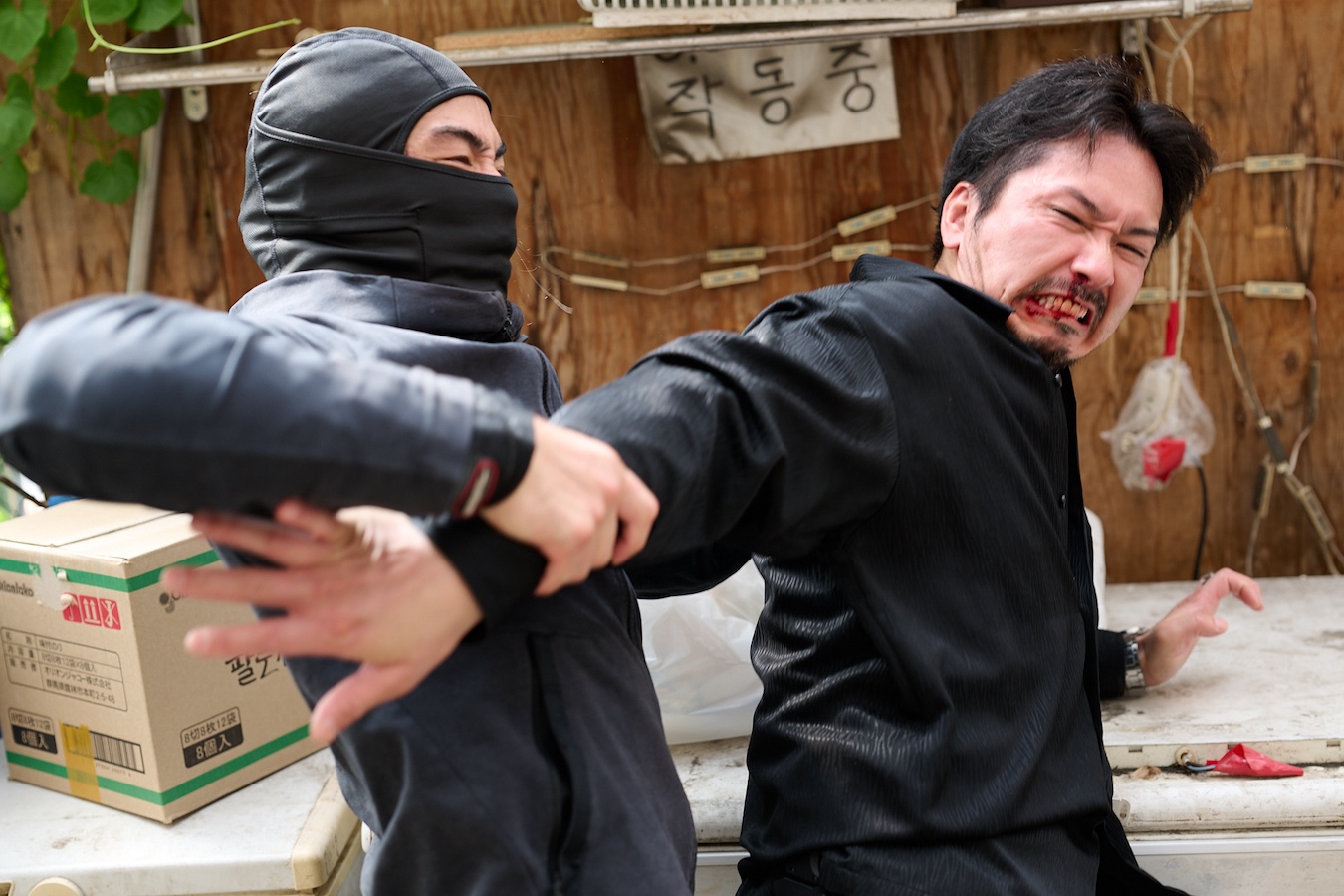
R: The film is set in Tokyo's hostess club world, a world you witnessed firsthand. How do you balance telling that story honestly without it becoming exploitative?
C: I think the key is simply to try to stay honest. It's a fictional story, but a great deal of it is based on real things that I saw or that other actors and actresses in the film actually experienced. I think filmmakers should always put trust in their actors. If you can't, why did you hire them? Give them the story and guide them along it, but let them tell the story the way that they perceive it. I also think you are always responsible to question your own accuracy, to constantly fact-check, and to listen to everyone who has an opinion to share. Even if you don't act on it, it's important to hear it out. If you do, I think you'll always keep things as honestly as possible.
R: You cast Tiffany Rossdale in a central role, and she spent four years preparing for it. What did she bring to the film that you didn't expect when you first cast her?
C: Out of everyone cast in the film, Tiffany brought the most real life experience to her character. As a first time actress, I wanted her character to be easy to play, so I wrote her to be as close to Tiffany's actual experience as possible. The hard part of that for Tiffany is that it meant digging up painful things from her past and having to re-live them through the character. The fetish bar scene, for example, pulled a lot from Tiffany's life, all while learning how things work on a feature film set. It was tough, but she did a great job and I felt Angel was a wholly believable character for it.

R: You play the antagonist, a pimp running a club where women are being trafficked. How did you approach that role as someone who clearly has a moral opposition to everything that character represents?
C: The character I played, Baron, was born out of my own experience of having to live in constant survival mode for years. One of the things that hard life experience has taught me is that morality, at times, can be a luxury of those who have. Once you get hungry enough, even naturally good people can do bad things. For me, Baron was a person who was just trying to survive, but who got so deep into a world that he didn't know how to get out. In preparing for the role, I read the autobiography of Iceberg Slim, and one of the things that was most interesting was that when you read it, he speaks about all the times he cried because he knew how horrible he was, how many people he was hurting, and in particular how much he had hurt his mother. A lot of my portrayal of Baron came from that.
R: You raised the money for this film while living in Japan. For filmmakers who assume that kind of financing is impossible without a studio or without living in a major industry hub, what would you tell them about how you actually did it?
C: I would say that money is everywhere, actually. You would be surprised. It's just a matter of knowing where to look and how to talk to the right people. I got funding from 10 independent individuals, almost all Americans based in Tokyo. The key is that when you speak to them, you really have to be prepared. You need to have your legal documents prepared, your pitch deck prepared, so that everything looks clean and professional and all the i's are dotted and t's are crossed. Once you are properly prepared, you can find money in all kinds of places.
R: You already have a distribution deal with Darkside Releasing, which most independent filmmakers would consider the finish line. Why crowdfund for marketing at all at this stage?
C: As Eastbound Traffic is an indie film with no major players onboard, having distribution simply doesn't guarantee that people will be able to find or discover it in a sea of other content. I strongly believe that this is a film that deserves to be seen about a topic that needs to be addressed, so it's simply important to me that it actually really gets seen. I owe that to the people who invested in me to begin with. I personally need to know that I have done anything and everything that I could to make this film a success. I don't want there to be any what-ifs. And the bigger a splash we make for the first one, the easier it will be for the next one.
R: You are running a martial arts school, managing multiple businesses, and running a crowdfunding campaign for a film. What does your actual day look like, and how do you decide what gets your attention first?
C: My days are all about juggling. I try to get up at 5 or 6 and then work for an hour before getting my son ready for school. After he is off, I simply work up until I have to go teach, shoot, or have meetings. I bring my laptop literally everywhere and every time I can find 10 minutes, I just sit down and do as much as I can. At the end of the night when I finish teaching, I try to make sure my son has his homework done, then I go to bed early so I can make an early start again the next day. No real days off, but it's grind season at the moment, so that's simply how it goes.
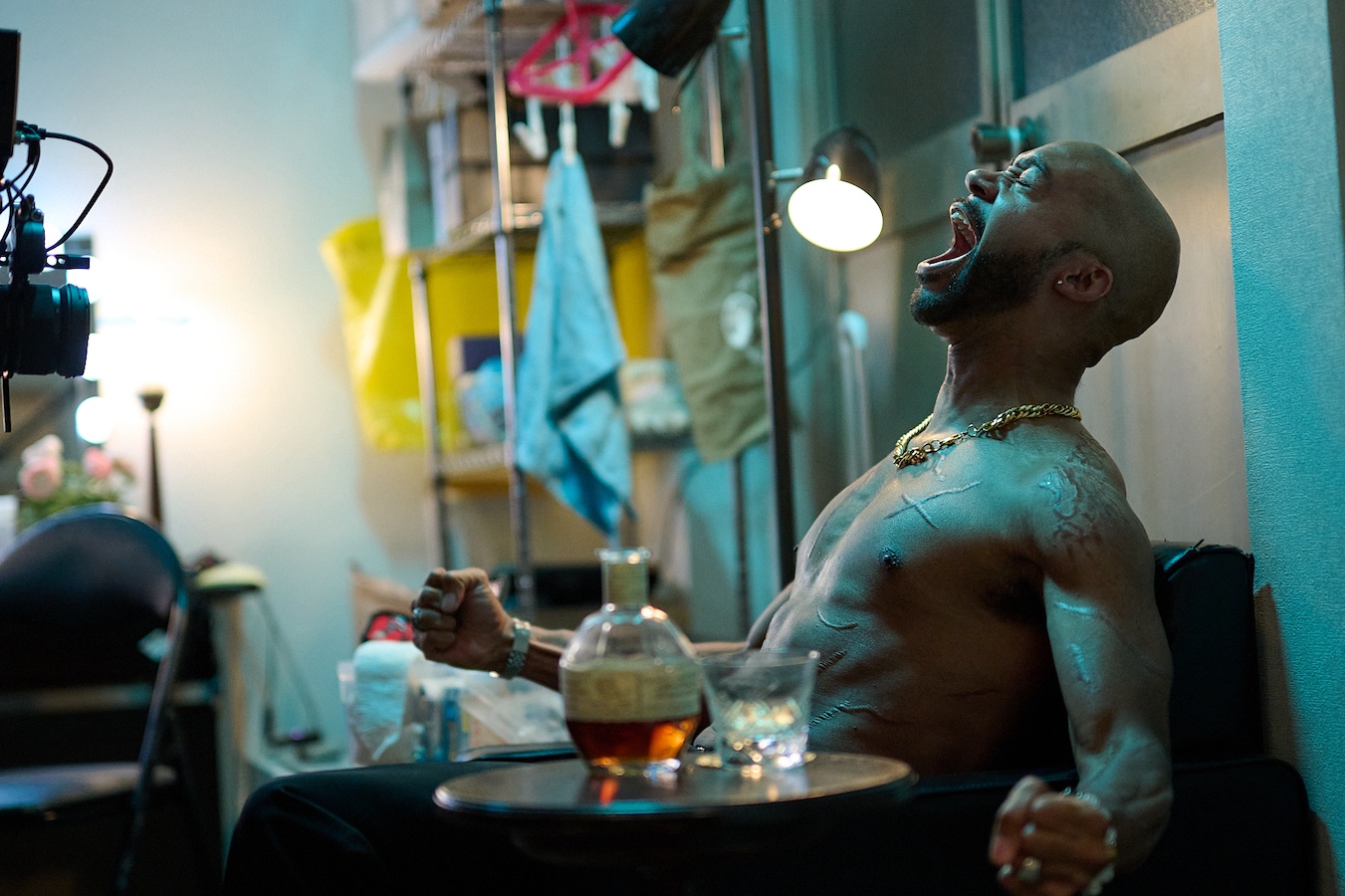
R: Crowdfunding a film while running multiple businesses is not a small undertaking. How do you stay focused on the campaign without it consuming everything else?
C: As a person I'm really used to juggling and constantly changing hats. Even within the entertainment space, I work as an action trainer, martial arts trainer, stunt coordinator, director, editor, you name it. I even work in hair and makeup at times. So it's easy for me to switch gears from one thing to another. The bigger challenge is not ignoring my family. Time with your kids when they are young is fleeting, so when my son says he wants to watch something on TV together or go for a bike ride, I just have to force myself to stop to give him space and attention. And at the least I try to take my wife out for a coffee every day so she has the space to unload as well. Finding time for both of them is by far the biggest challenge.
R: Ramiro AI is part of how you are executing this campaign. For filmmakers who are skeptical about using AI in their marketing process, what would you say to them based on your experience so far?
C: Thus far, Ramiro AI has been an absolute game-changer. Research that would take weeks before would be done in minutes. Granted, I think AI will never do all the work for you, but it is a great place to start with virtually anything when you don't know what your first step would be. As I mentioned, the hardest part of filmmaking is that in producing a feature, you are constantly being hit with things you don't know how to do, or being forced to operate in spaces you do not fully understand. Ramiro AI was incredibly helpful in navigating this, and it gave me a lot of unique ideas, strategies, and methods that I never would have thought of on my own.
R: For the filmmaker who feels like they are running out of time, falling behind, or losing faith in a project they have been carrying for years, what would be a piece of advice you can pass on to them?
C: The biggest advice I can give is to simply keep pressing forward. If you do, the universe will open up a path for you, but you kind of have to earn it. The other thing I would say is that you should always be questioning yourself. At the end of the day, your own success or failure is only ever on your shoulders. So when something doesn't work, the first thing you should ask is what part of that failure is your fault and how you could fix it. Press forward, try, fail, adapt, and try again. That's the formula.
Eastbound Traffic is the real example of hard work and commitment; it is the version that takes years to make it happen, that costs more than anyone planned, that gets made in a country where you have to build every relationship from scratch, and that moves forward anyway because there's no alternative.
Chuck Johnson made this film; now it needs to be seen.
If you want to support Eastbound Traffic and the kind of films that aim to make a difference in the world for their unique stories and backgrounds, the link to the crowdfunding campaign is below. Every contribution matters, and so does every share.