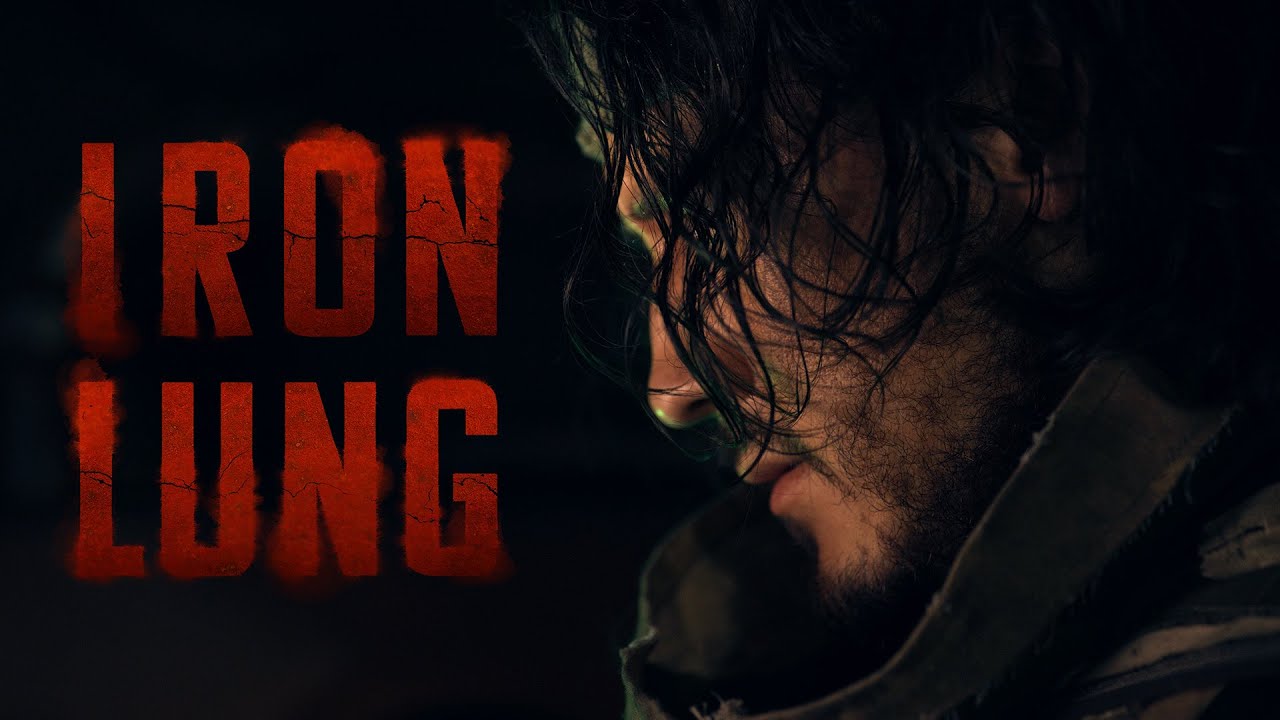
One of my clients sent me an article about Iron Lung and said, "This case doesn't apply to the vast majority of filmmakers, but there are important lessons here that align perfectly with what you have been doing and talking about."
Who Is Markiplier
Mark Fischbach, known online as Markiplier, started his YouTube channel in 2012 as a 22-year-old studying medical engineering at the University of Cincinnati. After a difficult year, a health scare, and a series of personal setbacks, he set up the channel as a coping mechanism and began posting Let's Play videos of survival horror games. He dropped out of college to pursue it full-time.
That was fourteen years ago.
Today he has 38 million YouTube subscribers and over 23 billion views across his channels. He is not just a gaming creator. Over the years he built increasingly ambitious narrative projects, interactive series for YouTube Originals, two podcasts that reached number one on Spotify, a clothing brand called Cloak, and a live touring career. He writes, directs, edits, produces, finances, and stars in his own work. By the time Iron Lung reached theaters, Markiplier had already spent over a decade building the infrastructure that would make it possible, one video at a time.
How Iron Lung Came to Life
In the summer of 2022 Markiplier played an indie horror game called Iron Lung, created by David Szymanski. The game takes place entirely inside a claustrophobic submarine navigating an ocean of blood on a distant moon. He was so taken by it that he approached Szymanski about adapting it into a feature film.
Development began in late 2022. The 35-day SAG shoot happened in spring 2023. Markiplier did almost everything himself, writing, directing, editing, starring, and producing, mostly on weekends while running his YouTube channel, podcasts, and clothing business. The production used over 80,000 gallons of fake blood.
Post-production took time, but he was deliberate about it. For 3 years, he mentioned the project to his audience, shared progress, and let anticipation build. He was not hiding it until it was finished and then announcing it. He was producing in public, letting his audience grow alongside the film.
The Traditional Path Said No
When the film was ready, Markiplier did what most filmmakers do first. He tried the traditional route. He approached distributors. He had the conversations.
They turned him down.
At the inaugural Cannes Creators Summit in May 2026, Markiplier told the audience directly: "I tried to show it to distributors and they turned it down." There was, as he described it, a stigma against YouTubers entering the cinematic space. The studios that did show interest wanted creative control, which he was not willing to give up.
His response was straightforward. He had spent fourteen years building an audience. He had sold out theaters on tour. He knew his audience existed and that they would show up. "I know that I've sold to them before," he said. "I was like, yeah, I can bet on myself for this one."
The Distribution Strategy He Built Instead
Markiplier set up his own production and distribution company, Markiplier Studios, and brought in Centurion Film Service, a veteran theatrical booking agency run by Bill and Sam Herting, to handle theater bookings. Centurion has been in the exhibition business for five decades.
Even Bill Herting was skeptical. His initial suggestion was to open in three theaters and see how it went.
Markiplier pushed back hard. "This is not ego. I'm so sorry to say this, but I have an audience of millions. It would be insultingly low, not to me, to them, to be like three."
They agreed to start with around 50-60 theaters, but Markiplier fans proved them wrong. When the trailer dropped, fans from all over the world started to ask for the movie at their local cinemas.
What Happened When the Trailer Dropped
The first trailer got 10 million views. The second trailer got 10 million views. Markiplier pinned the trailer to the top of his channel with one message: "Only in theaters January 30, 2026. Reserve your ticket now."
His wife Amy built a landing page at ironlung.com with an interactive map showing every location where the film would play, marked by Markiplier's screaming face. Fans did not just check the map. They started calling theaters. From Canada to Australia, from South America to Europe, fans shared email templates on Reddit telling each other how to contact their local cinema and demand a screening.
Theater chains started complaining that the volume of calls was overwhelming. One major circuit asked Centurion: "Could you tell his fans to stop calling? You have to turn those bots off." They were not bots.
Within a week, the booking count jumped from 60 theaters to 600. By opening day, January 30, 2026, Iron Lung opened on 4,161 screens internationally. AMC, Cinemark, and Regal were among the major chains. The public decided where the film would play. They bought tickets in advance. The demand was already paid for before a single screen lit up.
There was no paid marketing campaign. No ad buy. No media spend beyond movie posters for theaters. The audience was the marketing.
For International Territories
In the United States, Markiplier self-distributed through Markiplier Studios with Centurion handling bookings. For international territories he partnered with Piece of Magic Entertainment, which handled releases across Germany, Austria, Poland, the Netherlands, Belgium, Luxembourg, Czechia, Slovakia, Denmark, Sweden, Norway, Finland, Iceland, Estonia, Latvia, Lithuania, and beyond.
This is a territory strategy, which is exactly what we covered in our post on sales agents and distributors. He held domestic rights himself because he knew the market. He partnered for the territories he did not.
The Numbers
Production budget: approximately $4 million, self-financed. Marketing spend: near zero. Opening weekend domestic gross: $18.19 million. Total worldwide gross to date: over $50 million. Return on investment: approximately 17 times the production cost.
Iron Lung came in second at the domestic box office on opening weekend, just behind a Disney release. It outperformed Amazon MGM's heavily marketed documentary, which had a reported $35 million marketing spend. Iron Lung had no marketing budget and beat it.
The Digital Release: Where the Gatekeepers Showed Up Again
After the theatrical run, the next step was digital release. And this is where the story gets instructive in a different way.
Markiplier wanted to release Iron Lung on YouTube, the platform where he built his entire career. But YouTube's platform policies created an unexpected obstacle. Releasing a film for purchase on YouTube is not like uploading a video. Films require an aggregator, a licensed third-party company that prepares, delivers, and manages the film's availability on platforms. It is part of the traditional distribution infrastructure that exists on every major streaming platform, and YouTube is no exception.
Markiplier does not just want to solve this for himself. He wants to change it. He is actively trying to build a digital aggregator that would allow him to host Iron Lung on YouTube's Film and TV platform and then open that same path to other independent filmmakers, so that creators can release films without needing to go through the same gatekeepers he has been fighting the entire way.
The negotiations to release Iron Lung on YouTube reached the very top of the company. YouTube CEO Neal Mohan agreed to a direct distribution arrangement for the film, bypassing the aggregator requirement. But Mohan was explicit: this was a one-off special case, not a policy change.
Iron Lung debuted exclusively on YouTube for purchase on May 31, 2026, announced by Markiplier himself during a Deadline-moderated panel at the Cannes Film Festival.
Cannes and the Studios Calling
The same industry that turned him down is now asking him how he did it.
Markiplier was invited to speak at the inaugural Cannes Creators Summit in May 2026, alongside YouTube and MK2 executives, discussing what creators entering the traditional film ecosystem actually looks like and what it means for the future of distribution. Hollywood studios have approached him since the release asking: "How did you do it? Where did you come from?"
His answer is not complicated. He built an audience. For fourteen years. One video at a time.
The Iron Lung Roadmap: What You Can Actually Copy
This is not a story about 38 million subscribers. The point is that having an audience gave him something that no distributor, festival selection, or marketing budget could have replaced.
He had options because his audience was waiting for his film.
When distributors said no, he did not need them. When Centurion suggested three theaters, he could push back because he had proof. When studios wanted creative control, he could walk away. When YouTube's platform policies blocked him, he had enough leverage to negotiate directly with the CEO.
The audience was not just his marketing campaign. It was his distribution infrastructure, his negotiating power, his creative freedom, and his financial return. His followers decided on the marketing campaign. They decided where the film would screen. They bought the tickets in advance. They turned a potential three-theater release into a worldwide phenomenon.
And he did not invest in paid marketing. He invested in his audience before the film ever existed.
Here is what the roadmap looks like, broken down:
- Build your audience before you have a film to sell, and build it consistently over time
- Let your audience into the process while you are making it, produce in public
- Know your territory and decide early what you will control and what you will partner on
- When you are ready to release, activate your audience with a clear and simple action
- Give them the tools to act, a landing page, a map, and a way to request the film locally
- Understand the infrastructure required for digital release and plan for it in advance
- Do not wait for a distributor to validate your film; know your audience well enough to validate it yourself
Distribution does not create demand. Audience does.
If you are an independent filmmaker and you are not building your audience yet, someone else is building theirs. And they will be the ones distributing their films, the ones who get to say no when the deal is not right, the ones whose fans show up without being asked twice.
That is what we work on inside Ramiro AI. Building a clear audience strategy so your film does not depend on luck, gatekeepers, or last-minute miracles. Start building yours today.
Sources to this article: Wikipedia, The Hollywood Reporter, IndieWire, Primetimer