Let us start with the number everyone is talking about.
Backrooms made $318 million worldwide. It became A24's highest-grossing film in North American history. It was made for $10 million. Kane Parsons directed it at 20 years old and opened it at number one at both the domestic and worldwide box office, making him the youngest director in cinema history to do so.
Now let us talk about something nobody else is discussing.
Kane Parsons was the director. He was not the producer. And in the film industry, those two roles have very different relationships with money. A director, unless they negotiate otherwise, receives either a flat fee or a salary for the duration of production. The film makes $318 million, and the director does not automatically see a cent of that unless they negotiated a share of the profits into their contract from the beginning.
I have read every interview Kane Parsons has given about Backrooms. Not one of them mentions money. He talks about creative freedom, about the world he built, about the trust A24 gave him. All of that is real, and it matters, but the silence around the financial terms is telling, and as someone who has worked in film distribution and marketing for 18 years, I notice it.
I am saying this: if you are a filmmaker about to sign a deal with a studio, a distributor, or any production partner, and your film has any chance of making real money, you need to negotiate a cut of the profits. Not just a fee. Not just a salary. A percentage of what the film generates while it is alive.
That is called backend participation. In simple terms, it means that for every dollar the film earns after costs are recouped, you receive a percentage. It is how you keep benefiting from your work long after the shoot is over, and it is one of the most important conversations to have before you sign anything.
Now let us talk about how this film actually came to be, because the roadmap is genuinely worth studying.
Who Is Kane Parsons
Kane Parsons grew up in Petaluma, California. He started making films at age 10, by 11 he was teaching himself visual effects software on his own. At 13, he was diagnosed with arthritis that made it difficult to walk at times, and he channeled that stillness into building digital worlds on screen.
His advantage was clarity. He knew what he wanted early, and he started. Many filmmakers do not find that clarity until they are much older, and that is completely fine. It does not make you late. It just means that the moment you find it, you begin. Because the filmmakers who build the careers they want are not the ones who were born knowing. They are the ones who started.
Where the Idea Came From
At 14 Parsons came across an image that had been circulating on the internet since 2019. It showed an infinite corridor of yellow wallpaper, the kind of place that feels like it should not exist, like you have walked through a wall into somewhere reality forgot to finish. It was part of what is known as creepypasta, collaborative internet horror mythology built by thousands of anonymous contributors over years.
Two years later, in January 2022, he published a nine-minute found-footage short on his YouTube channel, Kane Pixels, set in that world. Within 48 hours, it had gone from one million to seven million views. Within a month, studios were reaching out. He was 16 and in his junior year of high school.
What He Did Before the Deal
After the first video went viral, Parsons did not wait for a deal to move forward. He kept building. Over the next three years, he released around two dozen more videos that expanded the world of the Backrooms, each adding depth, lore, and new layers to the mythology. Together they accumulated nearly 200 million views. He documented the internal logic of the universe in a personal reference document that ran to over 70 pages. He composed the music himself. He kept his community updated and inside the creative process.
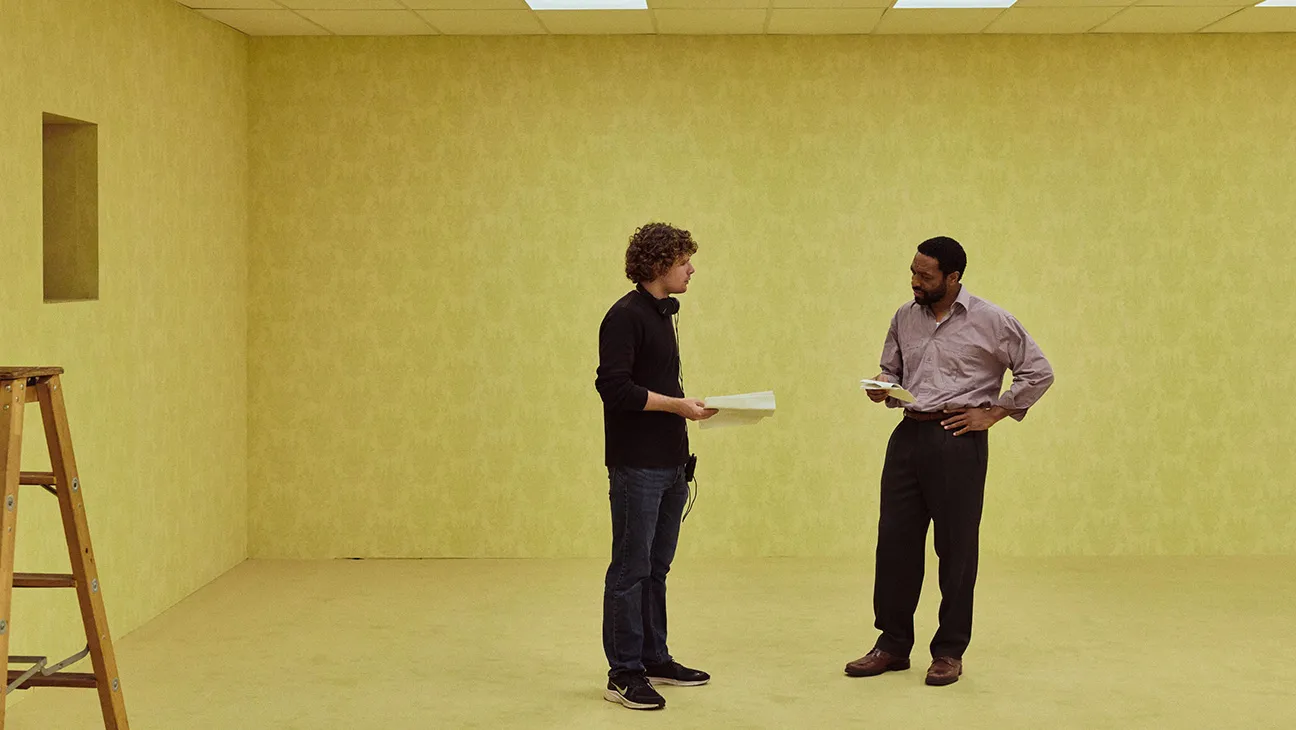
By the time A24 made a serious offer, he was presenting a living world with a deeply engaged global community already inside it. Multiple studios had approached him, but he chose A24 because they offered something more valuable than the biggest number. They gave him creative control over the world he had spent three years building. The film was announced in early 2023, production began in the summer of 2025, and wrapped six weeks later. Parsons directed, co-composed the score, and worked 21-hour days to get it right. He was 19 when he made it. The film starred Chiwetel Ejiofor and Renate Reinsve.
The Marketing Campaign That Changed the Conversation
A24 did something with this campaign that most studios are not willing to do. They abandoned the formula.
No massive advertising buy. No traditional PR rollout. No wall-to-wall billboards with the same image repeated in every city. Instead, they asked a more useful question: where does this audience already live and what does it already care about?
The Backrooms community had been on YouTube, TikTok, and Reddit for years, creating their own content, developing lore, building theories, and keeping the mythology alive long before A24 was involved. That community did not need to be introduced to the Backrooms. They already owned it. So A24's job was not to reach a new audience. It was to show up inside an existing one in a way that felt genuine.
The campaign they built was designed to feel like part of the Backrooms universe rather than an advertisement for a film. The centerpiece was a fictional furniture store commercial that looked as if it had been filmed in the 1990s and recorded on a VHS tape. Hidden inside it were details the Backrooms community immediately recognized as lore: a fax number, a location, a date. They found it, decoded it, and spread it themselves. A24 did not push it anywhere. The community did the distribution.
For outdoor advertising, A24 bought two billboards. One in Oshkosh, Wisconsin, a location with significance in the established Backrooms mythology, and one at the East Broadway Mall in New York, another location the community knew well. Both generated enormous organic reach because the audience understood exactly why those locations were chosen. It was not marketing to them. It was a conversation with them. The billboards went viral after the fans of the Backroom movement found them.
The best marketing is always word of mouth, and this campaign engineered it by speaking a language the audience already understood. When your content connects with something already alive in the culture, the community does the distribution for you.
The Numbers
Backrooms opened on May 29, 2026. It earned $81.4 million in North America and $118 million worldwide in its opening weekend. It became A24's highest-grossing film in North American history and went on to earn $318 million worldwide against a $10 million production budget.
A24 extended the film's life through merchandise tied directly to the world of the story, replica yellow wallpaper, posters, and branded items from the fictional furniture store in the campaign. The Backrooms YouTube series continues, and a sequel is being explored.
The Roadmap
- Start before you feel ready. Kane Parsons was making films at 10. You do not need perfect conditions; you need to begin.
- Build consistently before anyone is paying attention. Three years of YouTube videos before the feature deal. The audience grew because he kept showing up.
- Treat your world seriously even when no one else does yet. Seventy pages of internal documentation, composed music, Discord updates. He was building infrastructure before he had a budget.
- Choose partners who respect what you built. Multiple studios came calling, and he chose the one that gave him what he wanted: creative control.
- Find your audience where it already lives and meet it there. Do not try to reach people. Connect with the ones already waiting for what you make.
- Negotiate your contract before you sign anything. Creative freedom is essential, but so is a share of what your film earns. Backend participation means you continue to benefit from your work while the film is alive. If you have questions about what to ask for, contact us.
- Let your community do the distribution. Two billboards and a fictional VHS commercial generated more organic reach than most studio campaigns with ten times the spend.
What This Means for You
The most common reaction to this story is: this is not me. I do not have a YouTube channel with millions of subscribers. I do not have an internet mythology with years of community behind it.
You are right. Most independent filmmakers do not have those things.
But here is what you can have: an audience. The people who connect with your stories, your perspective, and your vision. The ones who will show up when you ask them to and tell others to do the same.
You do not need to have the IP figured out first, but you need to figure out the audience. Find, grow, and build a real relationship with them. So that when the film that changes everything is ready, the people who need to see it already know your name.
The Backrooms worked because the audience existed before the film did. That is a strategy, and it is one you can start building today.
Subscribe to Ramiro AI and start finding your audience today
Articles to write this: Hollywood Reporter, Deadline, IndieWire